
Equity benchmarks Sensex and Nifty on Friday spurted by nearly 2 per cent, propelled by heavy buying in IT, metal and financial stocks amid a rally in global markets after lower-than-expected US inflation data. A strong rupee against the US dollar and unabated foreign capital inflows further bolstered sentiment, traders said. Easing US inflation triggered speculation that the US Federal Reserve might slow down the pace of interest rate hikes.
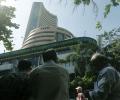
With rate cut expectations running high ahead of RBI meet this week, risk appetite improved especially in rate sensitive stocks

Inflation data, both at domestic and global level, interest rate scenario in the US, geopolitical situation and general elections in 2024 are some of the major factors that would influence trading in the equity market this financial year, analysts said. Besides, foreign fund trading activity and global trends will also dictate terms in the equity market going ahead. Equity markets across the globe faced major challenges in FY23 due to concerns over high inflation, which resulted in increase in interest rates around the world, lowering investor sentiment, experts added.

Tata Steel was the top loser in the Sensex pack, sinking over 5 per cent, followed by SBI, IndusInd Bank, Bajaj Finance, HDFC Bank and NTPC. NSE Nifty tanked 371 points to 16,614.20.

Maruti Suzuki fell 0.7% even after its March quarter profit grew by 15.8% to Rs 1,709 crore in Q4

Pharma was the top losing index amid worries about their earnings outlook with Lupin down over 4%

Top gainers in the Sensex pack include SBI, Yes Bank, Tata Motors, L&T, ICICI Bank, IndusInd Bank, ONGC, Maruti, M&M, Axis Bank, RIL, Hero MotoCorp, HDFC, Vedanta, Asian Paints, Tata Steel and Bajaj Finance, rising up to 7 per cent.

The 30-share Sensex gained 117 points to end above 29,000 at 29,006 while the 50-share Nifty gained 32 points to close at 8,761.

Notwithstanding sharp volatility in March, mutual fund (MF) investors didn't fight shy of investing in riskier small-cap-oriented schemes. Inflows into small-cap funds were not just the highest in absolute terms, they were also the maximum as a proportion of assets under management (AUM) among all market capitalisation (m-cap)-oriented categories. Investors funnelled Rs 2,430 crore down small-cap funds - 1.8 per cent of their AUM of Rs 1.33 trillion.

While a little more than 140 penny stocks have doubled in value, 555 have given negative returns in the past year. Of these, 84 shed more than half their value.
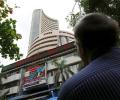
TCS, Wipro and Infosys dropped by up to 4.47 per cent, dragging down the BSE IT index by 2.96 per cent
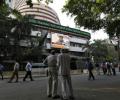
In the broader markets, BSE Midcap index slipped 0.3% whereas the BSE Smallcap index inched up by 0.2%

The market breadth, indicating the overall health of the market was strong

On BSE, 1,469 shares fell and 1,200 shares rose. A total of 190 shares were unchanged.
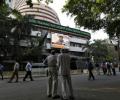
The broader markets outperformed the benchmark indices- BSE Midcap and Smallcap indices gained 0.4% each
Broader gains were capped as investors awaited corporate results from major firms
The Sensex closed the day at 28,141, up 486 points, while Nifty50 settled at 8,716, up 155 points.

The net inflows into active equity mutual fund (MF) schemes registered more than a twofold month-on-month rise in August, crossing Rs 20,000 crore, the highest in five months. This rise in net inflows was boosted by an 18 per cent growth in gross investments, driven by a record Rs 15,800 crore inflow through the systematic investment plan (SIP) route and Rs 5,000 crore collected by seven new fund offers (NFOs) in the active equity space, reveals data released by the Association of Mutual Funds in India (Amfi). Moreover, redemptions moderated in August, declining by 19 per cent to Rs 24,580 crore, after staying elevated in the previous three months owing to profit booking.

The breadth, indicating the overall health of the market, turned negative from positive

Investor wealth on Wednesday tumbled over Rs 3.27 lakh crore as markets witnessed massive selling pressure amid rising coronavirus cases in the country. The BSE benchmark index plunged 871.13 points or 1.74 per cent to close at 49,180.31. During the day, it declined 931.1 points to 49,120.34. Following the weak trend, the market capitalisation of BSE-listed companies tumbled Rs 3,27,967.71 crore to reach Rs 2,02,48,094.19 crore at the close of trade.

Benchmark indices failed to hold on to early gains and closed in the red for the seventh straight session on Thursday, with participants remaining in wait-and-watch mode ahead of the RBI's interest rate decision. Unabated selling by foreign funds added to the pressure, though a modest recovery in the rupee cushioned the fall, traders said. After rallying in early trade, the 30-share BSE Sensex came under selling pressure in the afternoon session and closed 188.32 points or 0.33 per cent lower at 56,409.96.

IndusInd Bank was down nearly 1% even after it reported a 21% rise in its fourth-quarter profit

Market breadth was weak with 1239 losers and 1078 gainers on the BSE.

Nikunj Saraf, Vice President Choice Wealth, answers your queries.

Investors became poorer by over Rs 4.47 lakh crore on Friday as markets faced severe drubbing, mirroring weak trends in global equities. The 30-share BSE benchmark dived 866.65 points or 1.56 per cent to settle at 54,835.58. During the day, it tumbled 1,115.48 points or 2 per cent to 54,586.75.

Equity investors became poorer by over Rs 9.75 lakh crore in two days of heavy decline in the equity market, with the Sensex plunging 1,457 points on Monday. The 30-share BSE benchmark tanked 1,456.74 points or 2.68 per cent to settle at 52,846.70 on Monday. It had ended 1,016.84 points or 1.84 per cent lower at 54,303.44 on Friday.

Equity indices nursed losses for the second consecutive session on Tuesday as investors continued to dump IT, banking and FMCG stocks amid a bearish trend in global markets. Unabated foreign fund outflows and the rupee dropping to another record low against the US dollar added to the woes, traders said. Participants were also in wait-and watch mode ahead of release of retail inflation and factory output data.

Stock market minnows put up a stellar show in 2021 giving returns of up to 60 per cent amid Dalal Street dream run and are likely to continue sailing northwards in the New Year too. Trumping pandemic-induced uncertainties, the Indian equity market posted stunning gains this year achieving several feats and smaller stocks benefited the most from the strong momentum. From reaching the momentous 50,000-mark in January to scaling 61,000-level in October, the BSE Sensex had an epic journey this year.

The breadth, indicating strength of the market was strong
There were more than three losers against every gainer on BSE

Extending losses for 7th session, Nifty fell below the 8,000 mark for the first time since Nov 25

Banking stocks dipped with Nifty PSU Bank index falling 1.7% after the government notified the ordinance that seeks to tackle non-performing loans in the sector.

State owned banks SBI and PNB were the top Nifty gainers along with ICICI Bank and auto shares.

NTPC, Sun Pharma Coal India and Asian Paints were among top losers on BSE Sensex

Small-cap stocks raked in big gains in fiscal 2021-22 by giving up to 36.64 per cent returns, outshining the bigger benchmark gauge and experts believe that they may continue to outperform in FY23. Markets faced many headwinds in the latter part of the last fiscal with the emergence of geopolitical tension, inflation concerns and FII selling. Analysts said that the first half of the last fiscal was very good, while the market entered into consolidation in the second half, combined with high volatility.

Some of the top indebted companies likely to face financial headwinds in the coming quarters include NTPC, PowerGrid, Tata Steel, Adani Power, JSW Steel, UPL, and Steel Authority of India. Together these 201 companies owed Rs 14.9 trillion to their lenders at the end of September 30, 2019, up 4.1 per cent year-on-year (YoY) during the first half of FY20.

Investors' wealth has swelled by over Rs 13.16 lakh crore as benchmark indices continued their northward march for the fifth session on the trot on Monday. The 30-share BSE Sensex jumped 935.72 points or 1.68 per cent to settle at 56,486.02 on Monday. In the past five trading sessions, the benchmark has zoomed 3,643.27 points or 6.89 per cent. Propelled by the optimism in equities, the market capitalisation of BSE-listed firms jumped by Rs 13,16,944.74 crore in five trading sessions to Rs 2,54,27,775.78 crore.

Auto and index heavyweights Reliance Industries and ITC were the top losers in early trades.

Investors have become poorer by a massive Rs 19,50,288.05 crore as equity market sell-offs continued for the fifth day in a row on Monday. The BSE Sensex plunged 1,545.67 points or 2.62 per cent to settle at 57,491.51 on Monday, while, the NSE Nifty slumped 468.05 points or 2.66 per cent to settle at 17,149.10. This is the steepest single-day drop for the indices in about two months. Over the last five sessions, the 30-share Sensex has tumbled 3,817.4 points or 6.22 per cent.
Ahmedabad, Delhi and Mumbai, which together make up 65% of national volumes, post decline in turnover in 2nd half of 2015.
 © 2026 Rediff.com - Advertise with us - Disclaimer - Privacy Policy - Sitemap - Feedback - About us - Terms of use - Grievances